While working with a CIU can provide hope, there are risks.
Attorneys who work in a CIU are not defense lawyers.
CIU attorneys are still prosecutors, and working with them still carries great risks for incarcerated people, especially those without lawyers.
Nothing you say in person or in writing to a CIU lawyer is confidential.
CIU could uncover information that opens the applicant or their friends and family members up to prosecution for new crimes or jeopardizes the applicant’s options for parole and probation
 VOD discovered this article from the Criminal Legal News while investigating issues about the Wayne County Conviction Integrity Unit’s practices with several defendants whose cases have been covered in VOD. Reprinted with photos added by VOD.
 By Marissa Boyers Bluestine, Kia Hall Hayes
MARCH 15, 2022
What You Need to Know Before Contacting a Conviction Integrity Unit | Criminal Legal News
Over the past several years, more and more prosecutors have created conviction integrity units (“CIUs”), or conviction review units (“CRUs”), in their offices. While still primarily used in offices serving bigger cities, such as Philadelphia, Chicago, or Detroit, many offices in smaller jurisdictions are also developing processes to review wrongful conviction claims. Working with a CIU or CRU can have tremendous benefits for convicted individuals, but working with a unit carries very real risks, especially for someone working without an attorney. In the best case, the CIU could agree the applicant’s wrongful conviction claim merits relief and support vacating the conviction rather than fighting against the petition in court.
 But the CIU could also uncover information that opens the applicant or their friends and family members up to prosecution for new crimes or even jeopardizes the applicant’s options for parole and probation. For these reasons, incarcerated individuals applying to CIUs must understand the benefits and risks of working with a CIU before applying to one.
A CIU is a special unit within a state or county prosecutors’ office dedicated to reviewing claims of wrongful convictions from people convicted by that office. No state or county requires that a prosecutor’s office has a CIU. It is entirely within the elected or head prosecutor’s discretion to decide whether to have a unit or not and how that unit will run. There is no right to have a case reviewed by the unit, and any decision the DAs office makes about an application can’t be appealed.

The work CIUs do goes beyond investigating individual claims of wrongful conviction. Most CIUs are involved in creating policies for their offices and conducting trainings on the factors that lead to wrongful convictions such as faulty forensics, false confessions, or eyewitnesses led through a flawed identification procedure to make an incorrect identification. But at the center of the units’ operations is investigating wrongful convictions.
The types of cases CIUs investigate can vary from office to office. Some will only investigate cases where the applicant claims they had no involvement in the underlying crime (usually referred to as “actual” or “factual” innocence). Most will also investigate cases where the applicant claims their conviction “lacks integrity” due to procedural or constitutional violations.
_____________________________________________________________
Read Wayne County procedures published on their website Conviction Integrity Unit | Prosecutor (waynecounty.com)

Newman
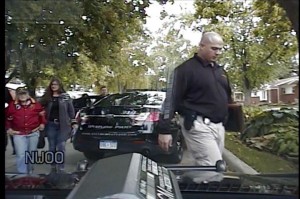
Excerpt: Is CIU part of the appellate/post-conviction process provided by Michigan law? No. There are important differences between a review by CIU and any appellate filings. CIU was not created by statute, its investigations are not part of a court action, and it is not governed by court rules of procedure. CIU does not focus on determining whether important constitutional rights were violated, it focuses on determining whether an innocent person has been wrongfully convicted. (r) Wayne Co. CIU Director Valerie Newman at 2016 prayer breakfast for Davontae Sanford.
REQUEST FOR STAY ON COURT PRODEEDINGS RE: INNOCENCE CLAIMS: VOD has found this language recently included on an order in one pending case. 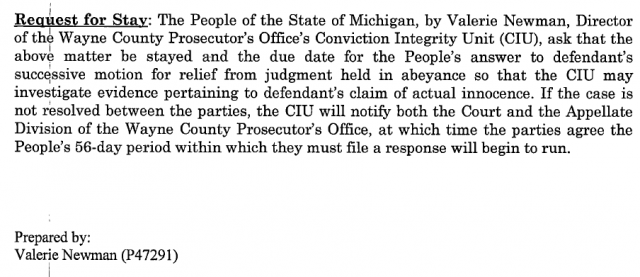
____________________________________________________________
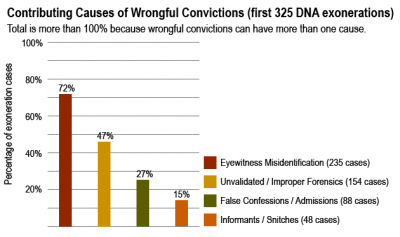 These units usually have at least one staff attorney and often an investigator so they can conduct an independent investigation. During its investigation phase, a CIU often will take many steps to conduct a full re-investigation of a case.
That could mean interviewing witnesses, finding witnesses who never testified at trial, conducting forensic or scientific testing of relevant evidence, reviewing police or other government files, and sharing those files with an applicant’s attorney. Because these investigations occur outside the regular proceedings of the judicial system, prosecutors aren’t focused on statutory or procedural issues. Rather, the purpose of the investigation is to determine whether the person convicted is the person who committed the crime.
If evidence developed or uncovered during the investigation proves the applicant’s innocence—or even if the evidence undermines the conviction to the point the prosecutors no longer have faith in it—the CIU can support the applicant’s request for post-conviction relief. Even if the evidence doesn’t prove the applicant’s innocence, CIUs can still work with an applicant’s counsel to negotiate a lower sentence or even reduced charges.
The goal of a well-functioning CIU is to review cases as objectively as possible, without considering what legal arguments may have been made and rejected before. Where a DA’s office may have taken a position that a given conviction should stand, a CIU looks at the case in a different light by focusing on the facts, not the law or procedural defenses. Often—61 times in 2020 alone those CIUs support a petition for vacatur (reversing a conviction) in court.
WHAT UNREPRESENTED PEOPLE NEED TO KNOW
Davontae Sanford was 14 when charged and convicted of 4 murders he did not commit. The Wayne Co. Prosecutor and the Detroit Police knew from eyewitness testimony the date of the crime in 2007 that he was not the killer, according to a 110 pp. Michigan State Police Report. Wayne Co. Prosecutor Kym Worthy kept Davontae in an adult prison for nine years although the real killer confessed just after Sanford was sentenced. To this day, Worthy denies Sanford is innocent.
Most people writing to CIUs are not represented by counsel. While some CIUs will not work with people who do not have an attorney representing them, many will. Indeed, for some units, pro se applications for assistance make up well over 70% of the cases under review.
But, while working with a CIU can provide hope, there are risks. People reaching out to a CIU need to know how that unit operates and be aware of not inadvertently waiving otherwise protected information.
First and foremost, attorneys who work in a CIU are not defense lawyers.
They do not, and never will, represent someone who has written to them. They are prosecutors who investigate wrongful conviction claims, and they do not provide legal advice to people who have written to them.
I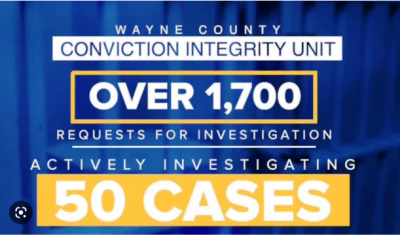 t can be used against you for the case being reviewed or even for other criminal activity for which you were never prosecuted. In addition, in many states anything that is in a prosecutor’s file is subject to right to know or freedom of information laws. That means what you provide to a CIU can end up in the hands of a reporter or anyone else whose request to see the file is granted. Once you provide information to a CIU you can’t take it back.
As mentioned above, the CIU will conduct an investigation if they choose to review your case. An investigation means they will contact every person in the case or who has information about the crime. That could include your family members or loved ones.
THE CIU WILL WANT TO TALK WITH YOUR LAWYERS
To conduct a thorough investigation, the CIU may want to talk to the attorneys who represented you at trial, on appeal, or in post-conviction proceedings. The CIU may also want to review your past attorneys’ files and the files of any attorney or innocence organization currently representing you or with whom you’re working.
 You should understand your attorneys are required by law to keep confidential any information they learned about your case from representing you—including the contents of their files. They cannot share their knowledge of your case or their files with the CIU without your permission. You can choose to allow your attorneys to share this information if you want to.
If a CIU requires you to waive attorney-client privilege to have your case reviewed, you should be very cautious.
Also, any communication between you and your attorneys—letters, conversations, messages, and so on—about the case is considered a privileged communication the attorney cannot reveal to the CIU without your permission.
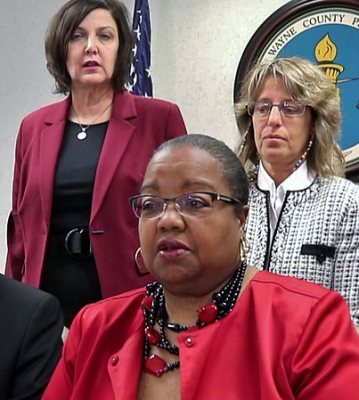
Wayne Co. Prosecutor Kym Worthy (seated) with Atty. Gabi Silver (l) and CIU head Valerie Newman (r) behind her, during announcement of Richard Phillips’ exoneration March 25, 2018
You may not know all the information your former or present attorneys have in their files; they may have information linking you or people you know to a crime. You may need to decide if you will permit your past and any current attorneys to share what they know about the case, their communications to you and from you, and their case files with the CIU. In making that decision, you may want to consult with a lawyer who is not part of the CIU.
While the CIU may begin reviewing your application even if you decide not to share or files with the CIU, at some point they may need to speak with your lawyers. The CIU may advise you that their investigation cannot be completed and a decision cannot be made on your claim without speaking with your past attorneys and/or reviewing their case files. At that point, you will need to decide if you are willing to waive your rights and give your past lawyers permission to share their information, case files, and communications with you to the CIU.
Families demand FREE THEM ALL at Wrongful Conviction Rally June 4, 2021 at Detroit FMHJ Courthouse
Many times, when convicted individuals write to a prosecutor’s CIU, they send long letters talking about their prosecution, conviction, and appeal. But these narratives often have information which would otherwise be privileged: information about the legal strategy, things your lawyer said, and even why the person decided not to testify at trial are all topics that are privileged and that don’t have to be disclosed. If you reach out to a CIU or are completing paperwork for them, make sure to keep the communication focused solely on the facts of the case or what happened. Talking about anything related to conversations you had with your attorney or decisions you made after consulting with them could inadvertently waive those privileges going forward—even without you realizing you’ve done it.
CONCLUSION
The increase of CIU units nationwide has given wrongly-convicted individuals another potential avenue to win their freedom. But CIUs vary greatly in the cases they accept and in the way that they operate. CIU’s review cases from a more objective viewpoint than the appellate unit of DAs offices, but CIU attorneys are still prosecutors, and working with them still carries great risks for incarcerated people, especially those without lawyers. Before reaching out to a CIU for help, incarcerated people need to understand how the CIU in their jurisdiction is run, and how working with them could potentially help or hurt their case.
Marissa Boyers Bluestine is an Assistant Director of the Quattrone Center for the Fair Administration of Justice at the University of Pennsylvania Law School. She joined the Quattrone Center after a decade leading the Pennsylvania Innocence Project, where she spearheaded the reversal of 14 wrongful convictions.
Kia Hall Hayes joined the Quattrone Center after working for eight years as a staff attorney at the Innocence Project New Orleans, where she helped secure the release of six individuals who served a total of 146 years for crimes they did not commit.
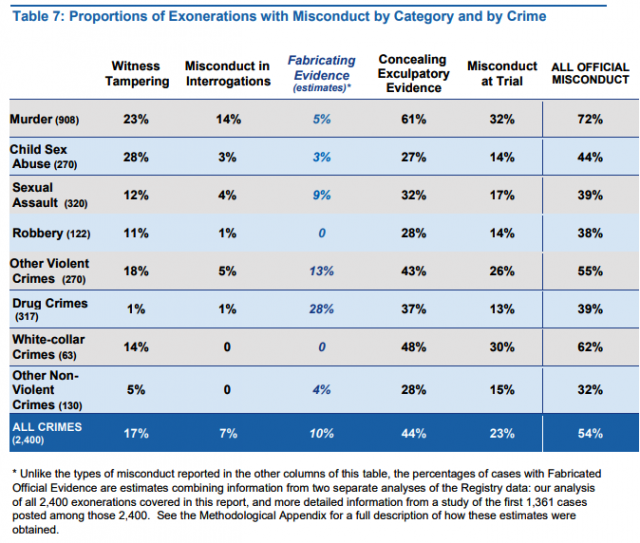
Gov’t. Misconduct and Convicting the Innocent
The Role of Prosecutors, Police and Other Law Enforcement – Nat’l Registry of Exonerations
http://voiceofdetroit.net/wp-content/uploads/Government_Misconduct_and_Convicting_the_Innocent-2.pdf




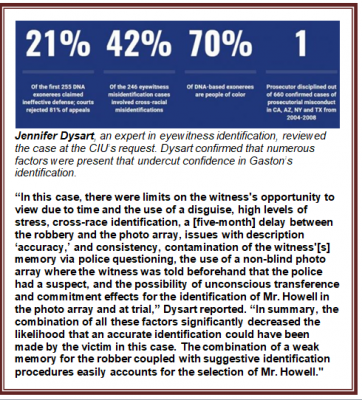 After looking at the photographs, Gaston selected #5, who was a filler. Hambright asked, “Are you sure?” Gaston said she was not. Hambright asked her to look again. Gaston used her fingers to cover up all of the faces of the individuals in the lineup so that only their eyes were visible. She then selected Howell, and said she was 100 percent sure that he was he robber.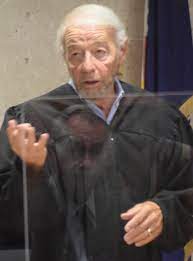











 Lynn added, “In October 2021, I sent a letter to all the jurors in Nancy’s 2004 trial, which included a study of Nancy’s case written by a domestic violence expert at Michigan State University. Within a few days, one male juror called me, and we spoke for two hours. He said he went through the detailed report with a fine-tooth comb. The juror was upset that none of the information about Nancy’s trauma from years of abuse and how it affected her actions was presented at trial. As a result, he did a complete turnaround from being quoted in the Detroit Free Press in 2005 as wanting Nancy to serve a life sentence to signing an affidavit supporting her immediate release.
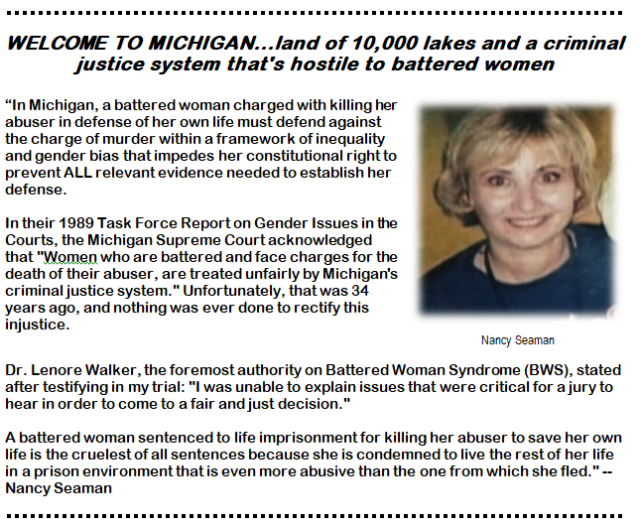 In August 2005, Judge McDonald ordered that Seaman be resentenced to second degree murder, but the prosecution appealed that order and it was overturned. Then in 2010, U.S. Eastern District Court Federal Judge Bernard Friedman overturned Seaman’s conviction, saying the prosecution failed to prove premeditation and deliberation, and that, combined with ineffective assistance of counsel and the omission of critical BWS evidence denied her a fair trial. He granted her habeas petition and ordered either a new trial or immediate release. The prosecutor again appealed.


 Voice of Detroit is a pro bono newspaper, now devoting itself entirely to stories related to our PRISON NATION and POLICE STATE. Funds needed now to pay quarterly web hosting fee of $460.00, due March 4, 2023. VOD will disappear from the web if fee not paid.
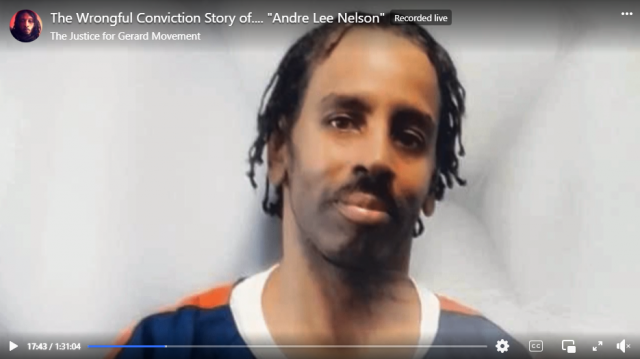
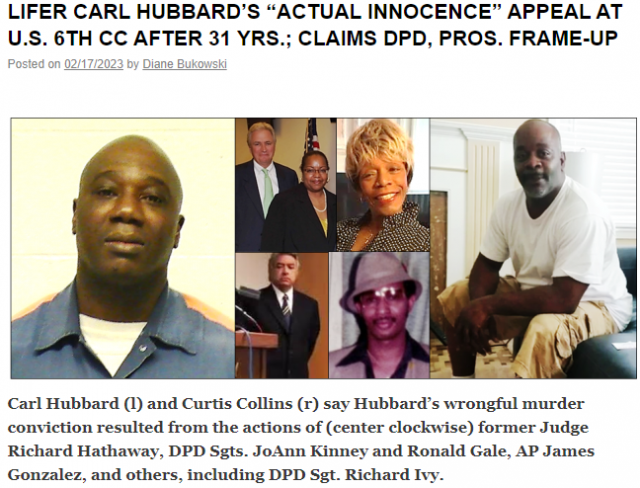 Carl Hubbard’s case has been covered since 2019. He has a good chance of victory now! After battling virtually on his own, pro se, for decades, he is at the Sixth Circuit Court of Appeals, which has appointed an attorney to represent him. His case is one of the most egregious of those Wayne County residents targeted by police and prosecutors in the 1990’s, using a Ring of Snitches. He and another lifer, Andre Nelson, were framed up by DPD Sgt. Joann Kinney and others in 1992 and 1993, with no forensic evidence, only coerced witness statements and a confession written by the police although the defendant could not read or write.
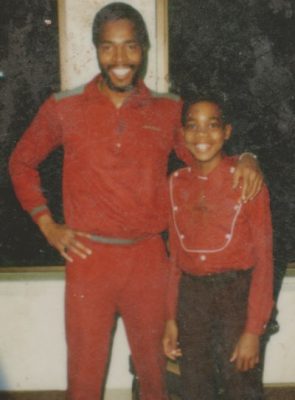
 I love telling her stories of my journey here in prison. I would tell her stories about Abner,(my brother in -law), how he would squeeze a penny until the rust color would fade; she would crack up and that would make my day. Her and Cat told me how Abner had to go to the hospital due to eating good food at home after eating prison food for the past 45 years. I told MOMMALOVE that Abner ate cat head for 45 years, that all they had to do was feed him food out of the garbage can and he would have been straight. She and Cat got a chuckle out of that.
 I know it is not well to weep because of death, that it is selfishness to wish to call back departed souls. But it hurts so hard. My greatest fear came to reality when I called home and Cat told me she was at the hospital with MOMMALOVE , that she had a stroke. MOMMALOVE passed three days after her born day. I have never been to the zoo. We had plans to go to the zoo together. I will still go in remembrance of her, yet we all know and understand it will not be the same.
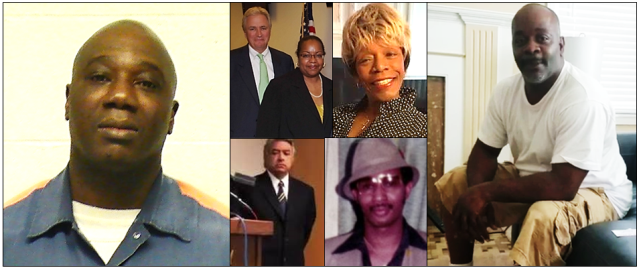


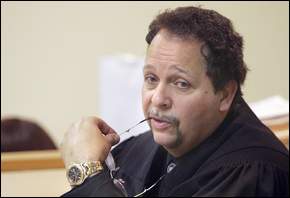
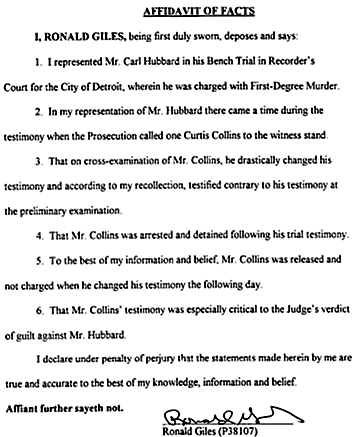 Hubbard’s conviction was primarily due to “especially critical” testimony by Curtis Collins, 19, that he saw Hubbard in the area of the murder, according to his attorney at trial, Ronald Giles (now a Judge at Detroit’s 36th District Court.)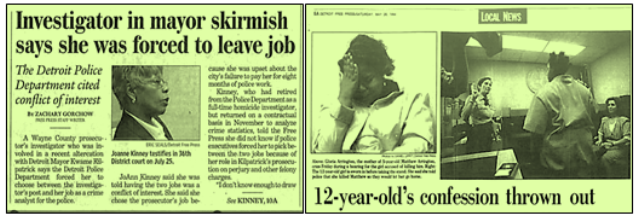
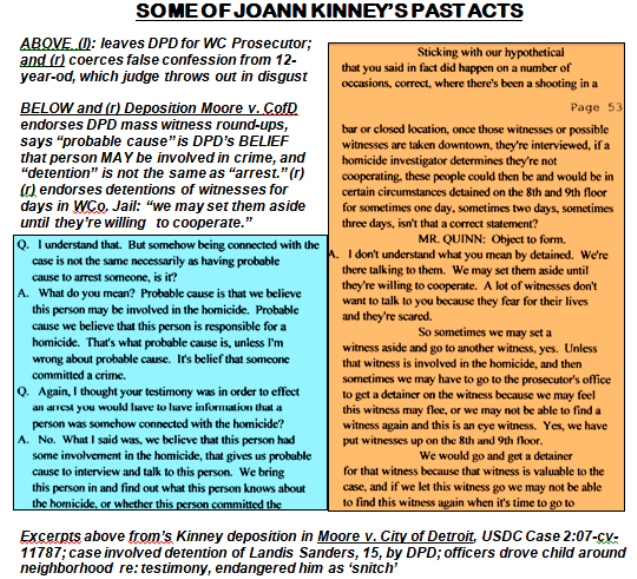
 Sgt. Kinney, by then a detective with the Wayne Co. Prosecutor’s Office, testified regarding similar DPD practices in the case of Moore v. City of Detroit, USDC 2:07-cv-11787. She claimed they were legally valid police actions used routinely during the now infamous “Ring of Snitches” era in the 1990’s and continuing into the next century. She said police BELIEFS constituted “probable cause” for witness “detentions” in the Wayne County Jail, denying they were “arrests.”


 Do not talk to us today about potential for “violence” from protestors, to do so is to appropriate the language and framing of white supremacy.

 President Joe Biden said in a written statement “Violence is destructive and against the law. It has no place in peaceful protests seeking justice.”


 These oppressive systems wreak both physical ills and psychological destruction on our minds. With every outburst of violence as a result of policing, we shrug it off, we keep going with our day in hopes of not being worn down by the reality of our country becoming increasingly unlivable.
 The World’s Most Innovative
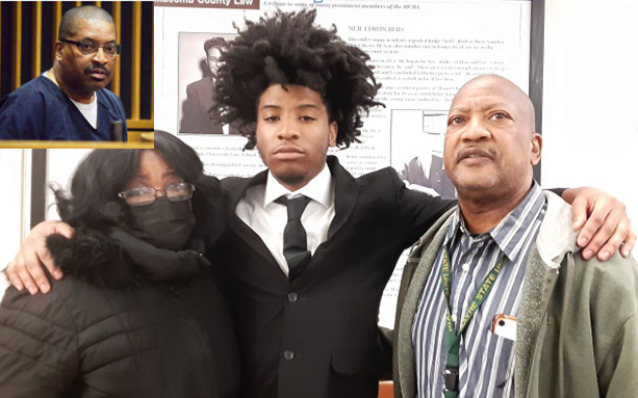
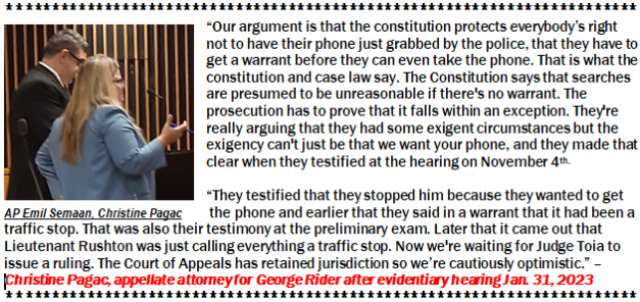
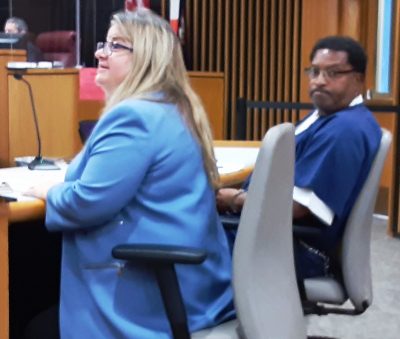



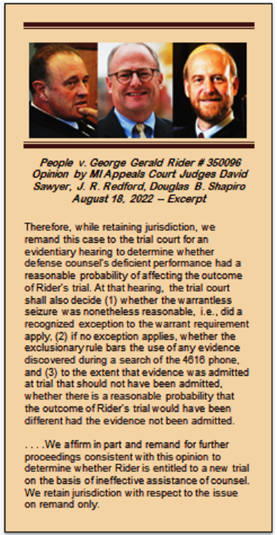 The Macomb County prosecutor focused on the lurid text messages at trial, with the alleged texters never taking the stand. The Macomb Daily prominently featured the details of the texts again on Jan. 10 this year.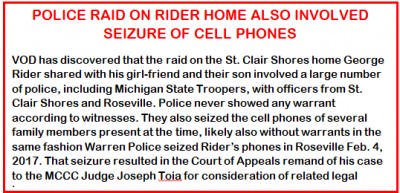
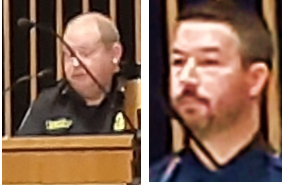
 “The search warrant for Mr. Rider’s vehicle, Ex. 2 [obtained after the seizure], further shows that these officers appears to have a habit of seizing phones without making arrests or having warrants authorizing the seizure,” Pagac writes.






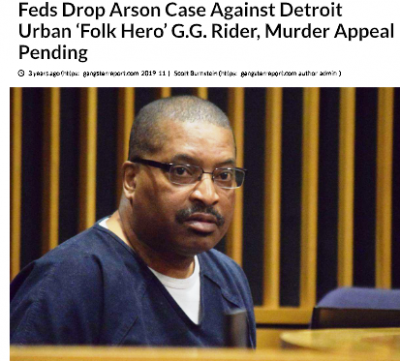 “Those in Detroit who remember Foster, known on the street as DoDo, say he owned several other properties in and around Brush Park and was known in the neighborhood as a paternal figure of sorts, despite his alleged drug trade involvement,” Reindl wrote. Rider has similarly been characterized as an “urban folk hero” by newspaper publisher Scott Burnstein, who has covered the case extensively, including in stories by Ricardo Ferrell.


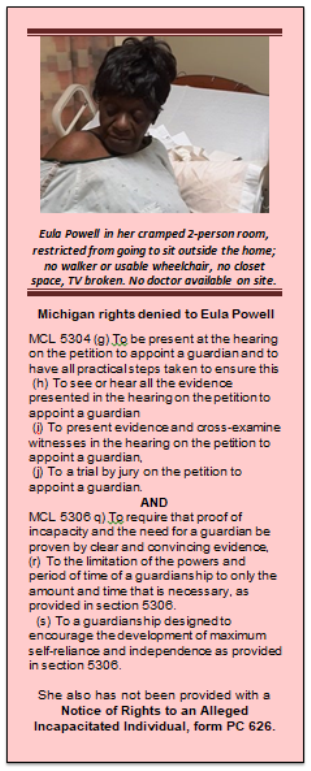 Geller, however, claimed in his report that a guardian has the right to determine who can and cannot visit. He said a guardian must approve visits from Bukowski and others who previously attempted to visit.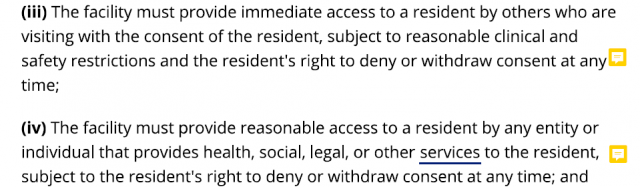
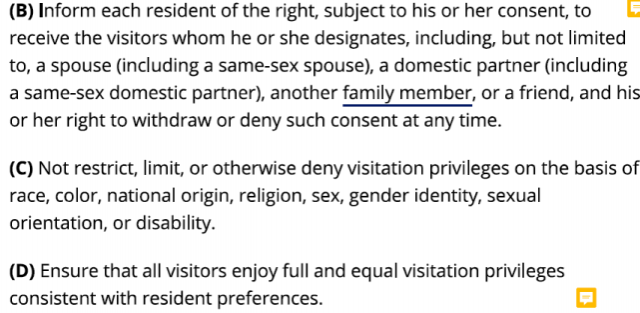 Nursing homes must also have written policies and procedures regarding visitation rights. During attempts to visit by Bukowski and others, copies of such policies were requested, but the requests were ignored. Those denying the visits refused to identify themselves, but claimed Ms. Powell’s guardian did not want them visiting.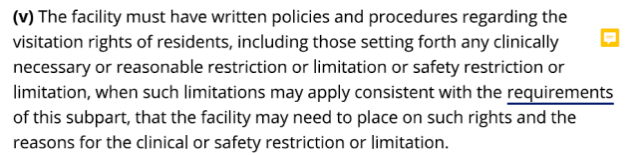
 My first encounter with abuse by a guardian was when I was clerking in a legal aid program while in law school. I helped a Pro-Bono attorney on a case where the guardian had moved the person out of the only home she had known, held a garage sale, and sold all her possessions, even toys that she had treasured for over 60 years. The client simply wanted her dolls back and we struggled to get the money back.